Programs

Can you guess?

Naturally, because this corner of the Treasure State really does seem to have the most of Montana (OK, maybe we’re biased), the region is well represented in the Montana Historical Society’s recent publication A History of Montana in 101 Places.

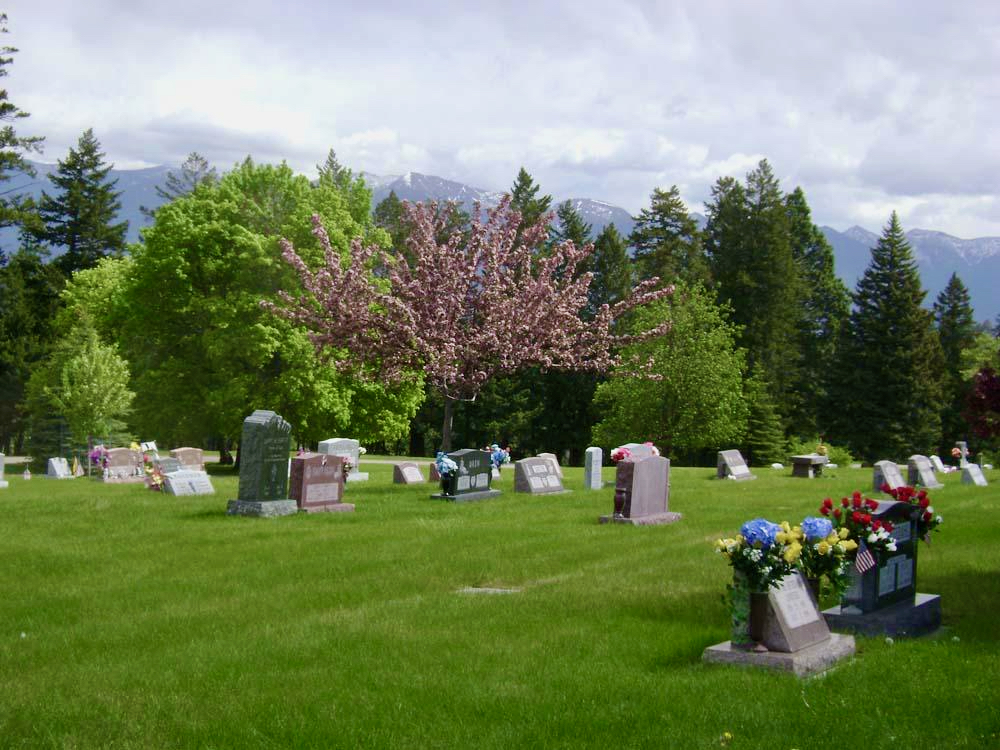
Not to be outdone, Kalispell specifically has a few sites in the book. We mentioned one in an earlier post–Woodland Park (included in the book for its status as a WPA project)–but there are more, such as the location pictured above.

Learn more at tonight’s presentation with Kirby Lambert of the Montana Historical Society and one of the authors of the book! History happy hour starts at 5, with the presentation at 6.

See you here and soon!

Can you guess? Read More »

Talk about hard choices

Get a glimpse of sites statewide, including Kalispell’s Woodland Park, that made the cut for 101 places that tell Montana’s story, and learn why, by one of the authors, Kirby Lambert (pictured), an engaging presenter with a lifelong love of Montana history.

From the ever-busy Logan Pass Visitor Center in Glacier National Park to the rusting remnants of Smith Mine Number 3 on a lonely hillside in Carbon County,  A History of Montana in 101 Places is an impressive anthology of the locations that have made and remade the Last Best Place.

The illustrated 304-page book from the Montana Historical Society Press follows on the popular A History of Montana in 101 Objects (2021).

Essays by current and former Montana Historical Society historians Christine Brown, Martha Kohl, Kirby Lambert and the late Ellen Baumler are accompanied by photographs from Tom Ferris.

Some images, like Alberta Bair’s bright yellow kitchen in her home near Martinsdale, need little visual interpretation, leaving us to enjoy the carefully researched and artfully told stories of the people who created them.

Others, like the remote Rosebud Battlefield National Historic Landmark in Big Horn County—known to the Tsétsėhéstȧhese naa Suhtaio (Northern Cheyenne) as “Where the Girl Saved Her Brother”—offer few visual clues to the dramatic history they have witnessed and are brought to life instead by the stories behind them.

The selections show cultural, economic and political developments that shaped the Montana we know today. Battlefields and government buildings appear alongside homes, schools, and taverns. Indigenous cultural sites share space with farms and mines, telling the stories of the community groups, tribes, elected officials, workers, and everyday folks who lived and labored there.

About the presenter: Now retired, Kirby Lambert worked for more than 36 years at the Montana Historical Society where he served in a variety of capacities—as museum registrar, curator of collections, curator of art, and director of outreach and education. Among numerous other duties, he curated nearly three dozen exhibits on a wide variety of topics relating to Montana art and history and, for a number of years, organized the society’s annual Montana History Conference. Kirby has co-authored several publications, and regularly contributes to Montana The Magazine of Western History. 

Details: Doors open 5 p.m. Wednesday, Aug. 26, for history happy hour in Hollensteiner-Stahl Hall; free presentation starts 6 p.m. 

Northwest Montana History Museum, 124 Second Ave. E., Kalispell; 406-756-8381; nwmthistory.org

Regular museum hours are 10 a.m. to 5 p.m. weekdays, 10 a.m. to 3 p.m. Saturdays through August

Talk about hard choices Read More »

Come learn bookbinding and more at the ballpark!

We look forward to seeing you at Glacier Bank Park (aka Glacier Range Riders home turf) from 5 to 7:30 Tuesday, Aug. 11, for the launch of the Great Fish Community Challenge!

We are delighted to take another swim along with 88 other worthy Flathead Valley nonprofits in the Whitefish Community Foundation’s annual casting of the net for funds that keep the good work going all year long.

Stop by the museum’s booth to do some bookbinding and learn what’s happening at the museum. Stay to browse all the other booths, and partake in free food and other activities.

Visit here for all the details.

See you there!

Come learn bookbinding and more at the ballpark! Read More »

The revolution galloped

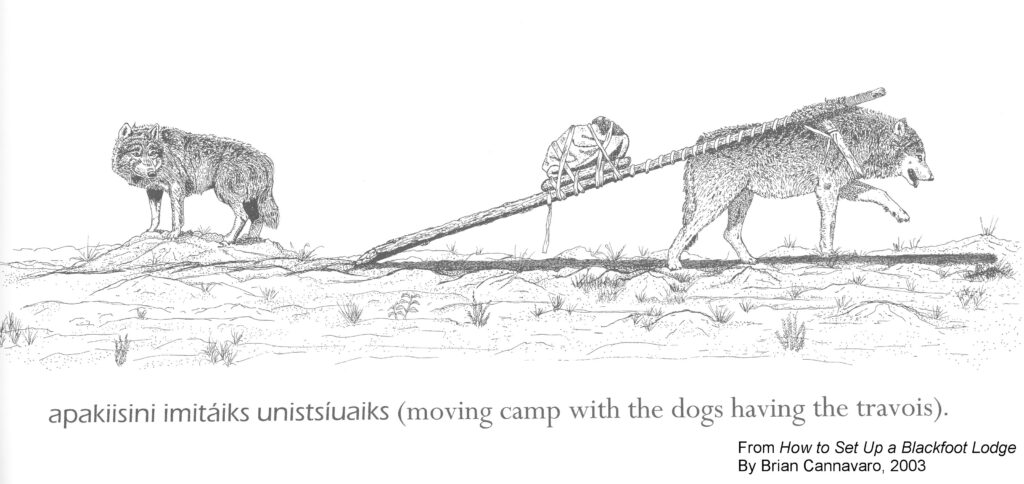
(Above: In the area that would become Montana, Indigenous people used dogs to pull travois. Horses were a game-changer, and contributed to the rapid rise of horse nations in the West.)

As leaders of the nascent United States signed the Declaration of Independence, in this region 250 years ago — then arguably a claim of Spain — another revolution was afoot, on four feet.

Although present in this area thousands of years ago according to fossil evidence, the horse had disappeared from western North America until Hernan Cortes made landfall much farther south, unloading more than a dozen horses in the Yucatan in 1519 from the holds of his ships.

Indigenous peoples didn’t have to have horse technology explained to them. They ran with it, and the horse population spread like wildfire along the mountainous spine of the American West, so quickly that the area to become Northwest Montana saw horses decades before California.

Some Indigenous people called horses “elk dogs” on first encounter. Horses were a dream come true: collapsing distances to hunting grounds and enabling easier travel across rugged landscape. They were integral to increasing trade, protection, and conquest. In little more than a lifetime, the Ksanka (Kootenai), Selis (Salish), Qlispe (Pend d’Oreille), and Niitsitapi (Blackfeet) saw horses transform life in the northern Rockies. 

Join us at the Northwest Montana History Museum for 250 Years Ago: This Revolution Came at a Gallop,  a presentation by equine researcher Brenda Wahler, who often writes and lectures on horse history. The museum also presents a companion exhibit, A Western Revolution Came First.

More about the presenter: Helena author and lawyer Brenda Wahler has consulted widely on equine matters and written several books, including Montana Horse Racing and, most recently, Marcus Daly’s Montana Empires, which prominently features Daly’s significant horse-related activities. Copies of books will be available for sale and signing.

Details for both 250-year anniversary events: 

Talk: 250 Years Ago: This Revolution Came at a Gallop, featuring equine historian Brenda Wahler at 6 p.m. Thursday, June 18; doors open 5 p.m.; free admission

Exhibit reception: A Western Revolution Came First: The Rise of Horse Nations, 5 p.m. Thursday, June 18

Northwest Montana History Museum, 124 2nd Ave. E., Kalispell, MT 59901; 406-756-8381
nwmthistory.org; regular museum hours 10 to 5 Monday-Friday (10 to 3 most Saturdays through August)
The revolution galloped Read More »

Walking tours kick off

Starting 10 a.m. May 26, the museum’s Downtown Kalispell Walking Tour runs (ha) most Monday mornings through September.

Now in its the third season, the info-packed tour highlights the landmarks, milestones, and colorful characters of Kalispell history. Actively engage at ground level with the city that became the cultural, economic, and transportation hub of the Flathead Valley, and you’ll never seen Kalispell the same way again.

Museum admission included!

Visit here for info. Read what the Flathead Beacon and the Daily Inter Lake wrote about the tour, then sign up!

We look forward to walking with you!

Walking tours kick off Read More »

Indigenous art and toolmaking takes the spotlight

Some spots remain for Aspen (pictured) and Cameron Decker’s talk 2 p.m. Sunday, Feb. 2. The Deckers specialize in art, toolmaking, and language in all they create. Most recently they unveiled a mural in Missoula and last year completed a parfleche commissioned by the Northwest Montana History Museum.

The Arlee artists will speak about the process of making Salish art and tools, the issues that it brings up in regard to making the objects (environment, sustainability, culture), and what that reveals about the place they are in as contemporary Native Americans. The presentation teaches about native plants, and connection with the land and local ecosystems. Their presentation also introduces the science behind these objects, as well as various contemporary Native American artists who influence their work. Both speakers incorporate and speak Salish and Plains Sign Language associated with the making of objects in their program.

John White Series talks go deep on aspects of Northwest Montana life and history and give reason to gather in winter with friends, family, and others who share curiosity for our state and its people. Talks almost always sell out; you can reserve space for the Deckers’ talk at the link below.

2 p.m. Feb. 2 Aspen and Cameron Decker on “Our Belongings: Sqelixʷ (Salish) Art and Toolmaking“

The John White Series pays tribute to beloved former staff members John Whites Sr. and Jr. of Central School. The 1894 schoolhouse is Kalispell’s oldest public building and home to Northwest Montana’s premier history museum, which draws thousands annually for exhibits and events.

The John White Series is a fundraiser for the nonprofit Northwest Montana History Museum and its mission to preserve and present regional history.

Details: 2 p.m. Sunday, Feb. 2; social time in Hollensteiner-Stahl Hall afterward; Northwest Montana History Museum, 124 Second Ave. E., Kalispell, MT 59901; 406-756-8381; nwmthistory.org

Admission is $15 for members, $20 for nonmembers. Purchase at the link above or you may also try your luck coming in to the museum.

Indigenous art and toolmaking takes the spotlight Read More »

John White Series ready to roll

For 23 years, the Northwest Montana History Museum has organized presentations on the many facets of Montana history for its John White Series.

John White Series talks last year focused on bears, motorcycle adventuring, indigenous foods, and Meriwether Lewis’s mom.

The talks go deep on aspects of Montana life and history and give reason to gather in winter with friends, family, and others who share curiosity for our state and its people. Reserve your space early to avoid disappointment (talks almost always sell out) by ordering the series or individual talks at the links below. You also can make reservations by stopping by or contacting the museum.

2 p.m. Jan. 5 Jack Gladstone on “C.M. Russell: Heritage and Legacy“
2 p.m. Jan. 19 Sally Thompson on “Northwest Montana Stories and How They Shape Our Lives“
2 p.m. Feb. 2 Aspen and Cameron Decker on “Our Belongings: Sqelixʷ (Salish) Art and Toolmaking“
2 p.m. Feb. 16 Denny Olson on “Glacier National Park: The Little-known Stories Behind the Grandeur“

The John White Series pays tribute to beloved former staff members John Whites Sr. and Jr. of Central School. The 1894 schoolhouse is Kalispell’s oldest public building and home to Northwest Montana’s premier history museum, which draws thousands annually for exhibits and events.

The John White Series is a fundraiser for the nonprofit Northwest Montana History Museum and its mission to preserve and present regional history.

Details: 2 p.m. Sundays, Jan. 5 and 19 and Feb. 2 and 16, 2025; social time in Hollensteiner-Stahl Hall afterward; Northwest Montana History Museum, 124 Second Ave. E., Kalispell, MT 59901; 406-756-8381; nwmthistory.org

Tickets for individual talks are $15 for members, $20 for nonmembers. The four-part series costs $40 for members, $75 for nonmembers. Purchase online, come in to the museum, or contact Amy Drown or Margaret Davis at the museum.

John White Series ready to roll Read More »

2024 John White Series speakers ready to roll

For 22 years, the Northwest Montana History Museum has organized presentations on the many facets of Montana history for its John White Series.

Regularly selling out, the subjects of John White Series talks last year ranged from historic fire lookouts of Northwest Montana, Kalispell’s bustling vintage theater scene, and underwater shipwrecks in Flathead Lake. This year’s speakers delve into grizzlies, motorcycle adventuring, indigenous foods, and Meriwether Lewis’s mom.

“These talks go deep on aspects of Montana life and history that give reason to gather in winter with friends, family, and others who share curiosity for our state and its people,” museum director Margaret Davis said. “We always advise people to reserve spots early to avoid disappointment as we have had to turn people away for lack of space.”

2 p.m. Jan. 7 Ron Brevik: “Over 16 years and 70,000 miles I rode by motorcycle all of the county, state, and federal paved roads in the Treasure State”

2 p.m. Jan. 21 Kate Kendall: grizzly expert spent decades in Glacier National Park and throughout Montana

2 p.m. Feb. 4 Mary Jane Bradbury: storyteller and historic interpreter takes on Lucy Marks, mother of Corps of Discovery expeditioner Meriwether Lewis

2 p.m. Feb. 18 Mariah Gladstone: Blackfeet-Cherokee resident of Babb founded Indigikitchen (indigikitchen.com) to revitalize indigenous food knowledge

The John White Series pays tribute to longtime beloved staff members John White Sr. and Jr. of Central School. The 1894 schoolhouse is Kalispell’s oldest public building and home to the premier regional history museum, which draws thousands annually for exhibits and events year-round.

Details: 2 p.m. Sundays, Jan. 7 and 21 and Feb. 4 and 18, 2024; social time afterward

Northwest Montana History Museum, 124 2nd Ave. E., Kalispell, MT 59901; 406-756-8381; nwmthistory.org

Tickets for individual talks are $15 (members) or $20 (nonmembers). The series costs $40 (members) or $60 (nonmembers). Purchase online when links available or contact Elle Eberts-Robocker, Donna Buckalew, or Margaret Davis at the museum.

2024 John White Series speakers ready to roll Read More »

Movie Night at the Museum’s gonna rawk

What happens when a heavy metal band takes to the road? How does the trip affect the lives of the band members, their crew, and the fans? All is revealed when This Is Spinal Tap screens as the September feature for Movie Night at the Museum. The film marked the directorial debut of actor Rob Reiner, who was, at that time, known mainly for his role as Archie Bunker’s son-in-law on television’s All in the Family. The film will show 7 p.m. Tuesday, Sept. 26.

The “mockumentary” stars Christopher Guest, Michael McKean, and Harry Shearer as members of Spinal Tap. The band is followed on their American tour by documentary producer Martin “Marty” DiBergi, played by Reiner. While the film was popular with the critics, it met with only modest commercial success. Over the years, however, it has developed a cult following and in 2002 it was selected for preservation by the National Film Registry for basically launching the mockumentary genre. 

Doors open 6:30 p.m. Admission and popcorn are free, but donations are gladly accepted to defray costs. Soda pop, water, beer, and wine are available for purchase. Seating is provided, but viewers are welcome to bring their own cushions or seating.

The Northwest Montana History Museum brings the past alive through exhibits, artifacts, educational programs, and events. Regular museum hours are 10 a.m. to 5 p.m. weekdays at 124 Second Avenue East, Kalispell. For more call 406-756-8381.

Movie Night at the Museum’s gonna rawk Read More »

Still a few spots left to put history into hands-on practice

For the second time this year, the Northwest Montana History Museum offers a bookbinding course that covers book history, bookbinding processes and tools, and hands-on learning.

Over eight sessions, students will review the history of the book and related arts, then learn how to construct at least five binding formats.

Margaret E. Davis, executive director of the museum and a longtime bookbinder who studied in China and has taught, lectured, and written about the subject, will teach the course.

No previous bookbinding experience is required, but students should have manual dexterity, ability to follow multiple steps, and interest in developing hand skills. Basic tools and materials are provided.

Details:
6 to 8 p.m. Wednesdays, Sept. 6 to Oct. 25, 2023
Northwest Montana History Museum, 124 2nd Ave. E., Kalispell, MT 59901; 406-756-8381; nwmthistory.org

Course fee: $150, $140 for museum members; contact Margaret Davis to enroll at 406-756-8381 option 6, or email director@nwmthistory.org. Space is limited; registration with payment in advance is required.

This project is funded in part by the Montana Arts Council, an agency of the State Government, and the National Endowment for the Arts.

Still a few spots left to put history into hands-on practice Read More »